Print Icon
 

Hi there, dear Reader!

What happens to a school lunch nobody eats? And what if a bottle bought in one country could one day be returned in another?

This month, we look at the people and places rethinking how we deal with waste, from a Catalan town giving meals a second life to a French metropole betting on compost. Come take a look.


Highlight of the month


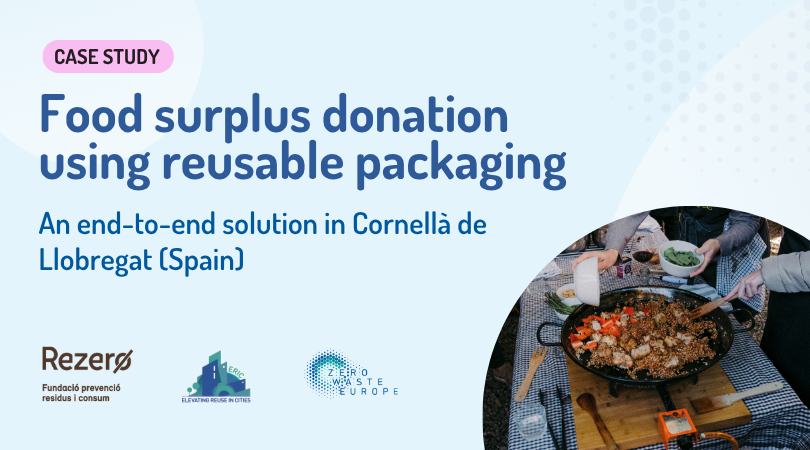
Turning school canteen leftovers into meals for people in need

Every day, school canteens end up with meals that go unserved. In Cornellà de Llobregat, near Barcelona, those meals now have a second life. 

Since 2022, the municipality has recovered unserved meals from five public primary school canteens and redistributed them to vulnerable people referred by social services. The meals are frozen in reusable polypropylene containers, delivered by bicycle, then returned and sanitised, ready to be used again. 

The results speak for themselves. Between 2022 and 2025, the scheme recovered 5,037 meals, avoided 171.6 kg of single-use plastics and saved about 1,343 kg of CO₂-eq. Even without a deposit system, more than 90% of the containers came back. 

The success comes down to clear protocols, strong coordination between stakeholders and public start-up funding. The model is simple, it can easily be replicated in other municipalities and public services. 

Want to bring this solution to your city? Read the full case study to discover how Cornellà built this circular solution and what it takes to do the same. 

This initiative was developed in collaboration with the Catalan organisation Rezero, as part of the Elevating Reuse In Cities (ERIC) project.
   

Want more #ZeroWasteCities?


We have compiled a short list of things you might find useful:

  • Explore the health and competitiveness of reuse. Watch the recording and browse the speakers' presentations from our webinar "Safe to reuse” here.

  • A bottle filled in one country, sold in another and emptied in a third: what happens next? This blog post looks at how Europe's glass reuse systems could connect, and what role HORECA could play.

  • Community composting beats incineration in Bordeaux Métropole: a cost-benefit study finds it's the more economical option over five years. Now available in French, with the summary in Hungarian and Polish here.


Zero Waste Europe gratefully acknowledges financial assistance from the European Union: Commission Directorate General (DG) Environment. The sole responsibility for the content of this newsletter lies with Zero Waste Europe. It does not necessarily reflect the opinion of the funder mentioned above. The funder cannot be held responsible for any use that may be made of the information contained therein.

Copyright © 2026 Zero Waste Europe, All rights reserved.

You are receiving this e-newsletter because you opted in at our site, on our Facebook or expressed interest to a member of our team.


Click to view in browser

You are receiving this email as you signed up for our newsletters.

Want to change how you receive these emails?

You can Unsubscribe or Update your preferences